 Kim Reeves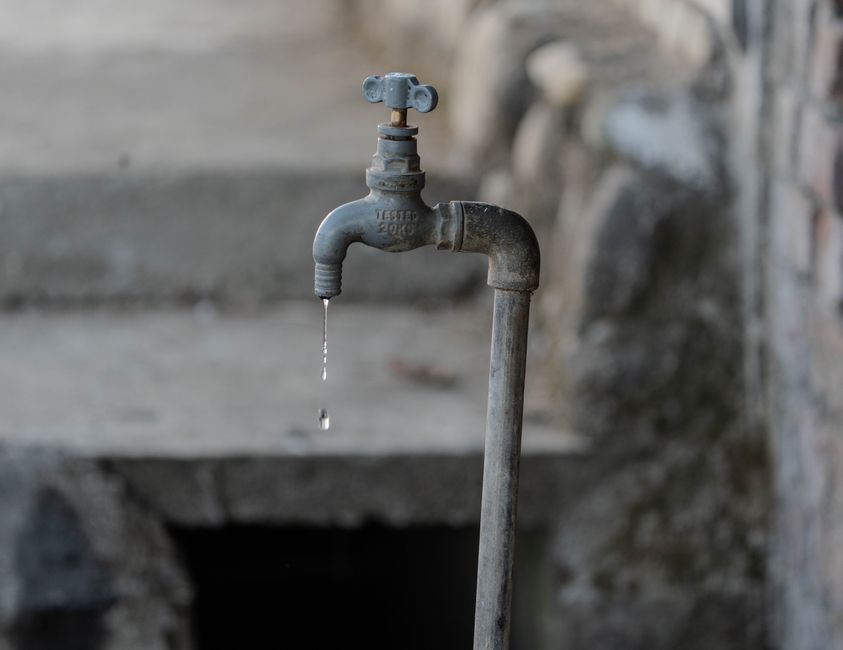
A dripping faucet wastes roughly 3,000 gallons of water per year. That’s the EPA’s number, and I’ll be honest, when I first read it I figured it was one of those inflated agency figures designed to scare people into action. So I did the math myself. One drip per second, 24 hours a day, 365 days: you land at about 3,153 gallons annually. The EPA is actually being conservative.
That number matters because water isn’t free. Depending on where you live, you’re looking at $20 to $35 a year for that single slow drip, which sounds negligible until you realize most homes I walk into have two or three leaky faucets running simultaneously, none of which the homeowner has gotten around to fixing. Multiply that out and you’re quietly paying $70 to $100 a year for water that’s going directly down your drain.
But the real cost isn’t the water bill. It’s what happens to the faucet seat, the valve body, and eventually the supply line if you ignore a drip long enough. I’ve replaced $800 faucets that could have been saved with a $4 washer if someone had acted within the first month.
- A dripping faucet wastes ~3,000 gallons per year, costing $20-$35 annually (EPA estimate).
- Most drips are caused by a worn washer, O-ring, or cartridge, often a $5-$15 fix.
- Ball-type and ceramic disc faucets require different repair kits; buying the wrong one is the #1 DIY mistake.
- Turn off the shutoff valve under the sink before touching anything, not just the handle.
- If water appears at the base of the faucet (not the spout), the problem is different and usually costs more.
Why Your Faucet Is Dripping: The Actual Mechanics
Here’s what surprised me when I started paying attention to this: most homeowners assume a dripping faucet is one problem. It’s not. There are four completely different mechanisms at work depending on your faucet type, and diagnosing the wrong one wastes money and time.
Compression faucets are the old-school two-handle style. You physically compress a rubber washer against a metal seat every time you turn the handle. Do that 10 times a day for 15 years, and that washer wears flat. When it no longer seals completely, water sneaks past. This is the most common drip on faucets installed before roughly 2000, and it’s the easiest fix: new washer, maybe a new seat if the brass is corroded.
Ball faucets (the single-handle type that rotates in a dome-shaped cap, common in Delta and Price Pfister designs) use a rotating ball with holes that align to let hot and cold water mix. The springs and rubber seats underneath that ball wear out. When they do, water drips from the spout even when everything is off. What surprised me the first time I rebuilt one of these is how many tiny parts there are: two springs, two seats, the ball itself, two O-rings on the body. Delta sells a complete repair kit for about $12 at any hardware store. Buy the kit. Don’t try to replace individual parts.
Cartridge faucets (Moen is the biggest player here) use a plastic cartridge that slides up and down. The cartridge contains all the sealing surfaces internally. When it wears out, the whole cartridge gets replaced. Moen has a lifetime warranty that I’ll get to in a minute, because it actually changes your repair calculus significantly.
Ceramic disc faucets have a single lever over a wide cylindrical body, and they use two ceramic discs that rotate against each other. These are genuinely the most durable design, and the research here supports that, but the repair cost when they do fail is higher because ceramic disc cartridges run $25 to $60 depending on the brand.
The Numbers Behind Each Repair
Before I get into the step-by-step, here’s what you’re actually looking at cost-wise. These are current as of July 2026, based on what I’m seeing at Home Depot, Lowe’s, and regional plumbing supply houses.
| Faucet Type | Common Brands | DIY Parts Cost | Pro Repair Cost | Difficulty (1-5) |
|---|---|---|---|---|
| Compression | Generic, older Delta/Moen | $2-$8 | $85-$150 | 2 |
| Ball | Delta, Price Pfister | $10-$18 (full kit) | $95-$175 | 3 |
| Cartridge | Moen, Kohler, American Standard | $12-$45 | $100-$200 | 2 |
| Ceramic Disc | Grohe, Kohler, Hansgrohe | $25-$60 | $150-$275 | 3 |
One scenario that plays out constantly in the field: homeowner buys a generic $8 cartridge at a big box store to fix a Moen faucet, installs it, faucet still drips. They call me frustrated. Turns out Moen’s cartridge part numbers are model-specific. The RP46074, RP19804, and 1225 cartridges look almost identical but they’re not interchangeable. The fix there costs $0 extra if they’d called Moen first, because Moen replaces cartridges for free under their lifetime warranty. I have used this warranty myself, on a kitchen faucet I installed in 2019. Called them, gave the model number off the faucet body, they mailed me a new cartridge within four business days, no charge.
That chart puts a dripping faucet in perspective. The running toilet is the real catastrophe. A faucet drip is fixable on a Saturday morning.
How to Actually Fix It
I’ll walk through a cartridge faucet since that’s what most people have in homes built after 1990, and Moen is the most common brand I encounter.
Turn off the hot and cold shutoff valves under the sink. This sounds obvious, but the mistake I see constantly is people turning off the faucet handle and assuming that’s sufficient. It’s not. The shutoff valve is the knob (or sometimes a lever) on the supply lines coming out of the wall or floor of the cabinet. Turn both clockwise until they stop. Then open the faucet to release pressure and verify the water is actually off. You’d be surprised how often a partially failed shutoff valve lets water through even when it’s supposedly closed.
Remove the handle. On most Moen faucets there’s a decorative cap on top of the handle, usually pried off with a flathead screwdriver wrapped in a rag (so you don’t scratch the chrome). Under the cap is a Phillips or hex screw. Remove it, and the handle lifts straight off.
Under the handle you’ll find a retaining nut or clip holding the cartridge in place. A pair of slip-joint pliers or a cartridge puller tool (about $8, completely worth it) will pull the cartridge straight up. Note the orientation before you pull it, specifically which direction the ears on the cartridge are facing, because it has to go back in the same way or your hot and cold will be reversed.
Insert the new cartridge in the same orientation, replace the clip, replace the handle. Turn the shutoffs back on slowly. Test. The whole job takes 20 to 30 minutes if you’ve done it once before.
Scenario in real life: A reader named Carol from outside Nashville emailed me describing a bathroom faucet that had dripped for “about two years” before she decided to fix it. She’d been ignoring it. When I walked her through the repair, the cartridge came out fine, but the faucet seat inside the valve body had a visible groove worn into it from two years of metal-on-metal contact with a failed cartridge. She had to replace the entire faucet. A $13 cartridge, repaired early, became a $189 faucet replacement. This happens.
When Not to DIY
I’m generally in favor of homeowners doing their own faucet repairs. The risk ceiling is low, parts are cheap, and the skill required is genuinely modest. But there are specific situations where I’d tell you to call someone.
If water is appearing at the base of the faucet rather than the spout, you’re dealing with O-ring failure on the spout body. Usually still DIY-able, but it means disassembly at a different point, and on some faucets (certain Kohler pull-out kitchen models, I’m looking at you) the geometry makes it genuinely aggravating without a service manual.
If you turn off the shutoff valve under the sink and it either won’t close fully or starts dripping itself, stop. A failed shutoff valve requires turning off water at the main, and depending on your setup, you may be getting into soldering or SharkBite compression fittings. That’s a different project.
And if your faucet is more than 20 years old and showing corrosion on the valve body, honestly consider whether repair makes sense versus replacement. A new mid-grade faucet from Moen or Delta runs $85 to $160, installs in under an hour if the supply lines aren’t corroded, and comes with that lifetime warranty.
Sources
- EPA WaterSense Program: Official data on household water waste from leaks, including the 3,000 gallons/year per dripping faucet figure.
- American Water Works Association (AWWA): Research on residential water use and leak frequency across U.S. households.
- Moen Lifetime Warranty Policy: Manufacturer warranty terms covering cartridge replacement at no charge.
- International Association of Certified Home Inspectors (InterNACHI): Field data on common plumbing defects found during residential inspections.
- Home Innovation Research Labs, Builder Practices Survey: Industry data on faucet types installed in new U.S. residential construction by decade.
Photo: Rajesh S Balouria via Pexels