 Paul Zhang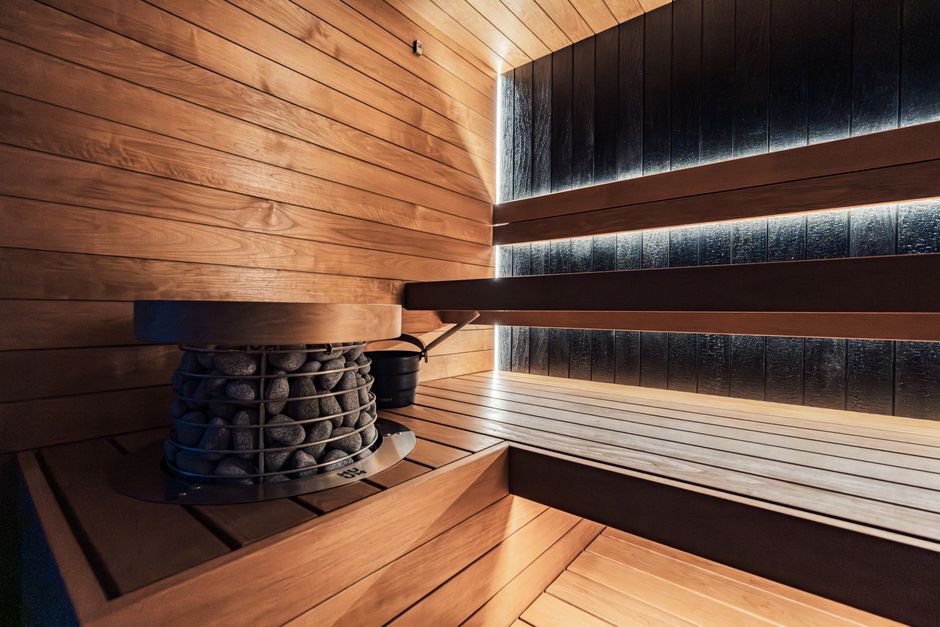
You got a quote for a home sauna, and it came back somewhere between “uncomfortable” and “absolutely not.” Maybe it was $8,000. Maybe, like one DIYer I read about this year, it was $12,800 from a local contractor. That number sends a lot of people straight to Google, which is exactly why “sauna installation” has become one of the hottest rising home-improvement search terms of 2026. Wellness rooms are having a serious moment, and the gap between what pros charge and what a prefab kit costs on paper is wide enough that the DIY question feels worth asking seriously.
Here’s the honest version of that conversation.
The $12,800 quote I mentioned? That homeowner built a custom indoor sauna for $2,847 instead. Great story. But they also said outright that basic construction skills and real guidance were non-negotiable prerequisites. That caveat does a lot of work, and it’s the part that tends to get buried in the Pinterest inspiration posts.
- Professional sauna installs run $3,000–$10,000 for most homes in 2026; custom builds can exceed $30,000.
- DIY prefab kits cost $3,000–$9,000+, but electrical work alone adds $500–$2,500 on top.
- Plug-and-play 120V infrared units are the only true DIY option , no electrician required.
- A dedicated 240V circuit is required for traditional heaters; most homeowners must hire a licensed electrician.
- Operating costs for infrared saunas run just $5–$15/month, making them cheap to run once installed.
What Professional Installation Actually Costs Right Now
According to Angi’s July 2026 pricing data, a fully installed home sauna runs $3,000 to $10,000 for most homeowners. That range covers prefab kit installs in an existing room all the way up to purpose-built sauna rooms with tile, benching, and a properly sized heater. Custom architect-designed builds with steam rooms, high-end cedar, and integrated lighting can blow past $30,000 without blinking.
What’s inside that professional quote? Labor, permits (more on those in a minute), electrical work, ventilation, and finishing. Contractors are also pricing in their markup on materials, which runs 20–40% in most markets. That’s not gouging. That’s how the business works. But it does mean a skilled homeowner is paying for something they might be able to supply themselves.
The Real DIY Entry Points (and the Ones That Aren’t)
This is where the research gets genuinely useful. Not all saunas are the same animal from an installation standpoint.
| Type | Kit Cost Range | Electrical Need | True DIY? |
|---|---|---|---|
| Plug-and-play infrared (small) | $3,000–$4,000 | Standard 120V outlet | Yes |
| Large infrared (6’×8’ or bigger) | $5,000–$7,000 | 240V dedicated circuit | Partial |
| Traditional 8’×8’ with 9 kW heater | $7,000–$9,000+ | 240V dedicated circuit | No (electrical) |
| Custom-built traditional | $2,800–$6,000+ in materials | 240V dedicated circuit | Skilled only |
The plug-and-play infrared units are the genuine DIY play. They run on a regular 120V household outlet, the panels bolt together in a few hours, and you don’t need a permit in most jurisdictions. Operating costs are remarkably low, roughly $0.15 to $0.50 per session, which works out to $5 to $15 a month for typical use.
The moment you go traditional, you need heat. Real heat. A 9 kW heater pulls serious amperage, and that means a dedicated 240V circuit. That’s not a gray area. Hiring a licensed electrician for that circuit runs $500 to $2,500 depending on your panel’s location, how far the run is, and your local market. Pure DIY on a traditional sauna isn’t really possible for most homeowners, not legally anyway.
The Costs That Ambush People
I’ve seen budgets fall apart on three things that don’t make it into the headline kit price.
Electrical. Already covered, but worth repeating: if you assumed the kit price was the whole number, recalculate. Add at least $500, and budget $1,500 to be comfortable.
Permits. Homeowners consistently underestimate this. A sauna room is a structural modification in most jurisdictions, especially if you’re framing new walls, adding ventilation penetrations, or running new electrical. Permit fees vary wildly, $150 to $800 is a reasonable range, but the inspection process can also surface issues with your existing wiring or framing that cost real money to fix.
Ventilation. Traditional saunas need fresh air supply and an exhaust path. Getting that wrong causes moisture damage, mold, and performance problems. If you’re converting an interior room, cutting a proper ventilation solution through an exterior wall (or into an adjacent space) can add several hundred dollars in materials and labor you didn’t plan for.
Who Should Actually DIY This
Here’s my honest read after 20 years of watching people underestimate projects.
You’re a reasonable DIY candidate if you’ve framed a wall before, you’re comfortable running wire (even if you hire the final circuit hookup), you can follow a kit manual, and you’re building into an existing finished space like a basement or large bathroom. The prefab kit manufacturers, companies like Almost Heaven, Finnleo, and Dynamic Saunas, have genuinely gotten better at making their systems installable by capable amateurs. The instructions are real. The tolerances are forgiving.
You should hire this out if the room needs to be built from scratch, you’ve never done finish carpentry, your electrical panel is already crowded or outdated, or you’re planning to use this as a selling point on a future home sale. Permitted, professionally installed work shows up differently on a disclosure and an appraisal than a sauna someone’s husband assembled over a long weekend.
What most people don’t realize is that the hybrid approach often makes the most sense. Do the kit assembly yourself. Hire the electrician for the 240V circuit. Pull the permit yourself (it’s allowed in most states for owner-occupied work). You capture the labor savings where you can actually deliver them and outsource the part where licensing and liability actually matter.
The sauna boom of 2026 is real, and the products available to homeowners right now are genuinely better than they were even three years ago. That $2,847 custom build exists. So does the project that cost someone $14,000 after permits, electrical surprises, and a contractor to fix the ventilation they’d done wrong. The difference, almost always, is honest self-assessment before the first nail goes in.
Sources
- How Much Does a Home Sauna Cost? [2026] (July 2026)
- What Does Sauna Installation Cost? (Cost Breakdown for 2026) (March 2026)
- How Much Does a Sauna Cost? The Complete 2026 Pricing Guide (February 2026)
- How Much Does a Sauna Cost? Full 2026 Pricing Guide (May 2026)
- DIY Indoor Sauna 2026: Complete Step-by-Step Building Guide (November 2025)
- Is Minimalism Finally Out? Home Trends for 2026 (Early 2026)
Photo: HUUM │sauna heaters via Pexels