 Steve Adams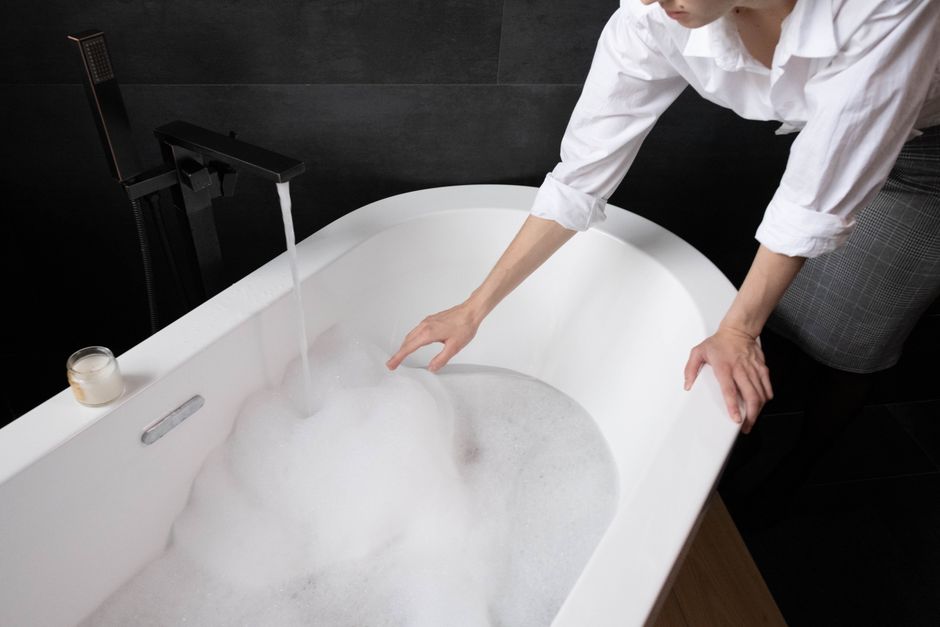
Hair. That’s almost always it. I’ve opened up hundreds of slow or completely dead bathtub drains over 20 years, and I’d say eight times out of ten, it’s a wad of hair and soap scum that could be pulled out by hand in about 45 seconds. No chemicals needed. No plumber. Just a slightly unpleasant two-minute job that most people put off for months because they assume it’s more complicated than it is.
That assumption costs people real money. I’ve had homeowners call me to snake a drain that turned out to be a hair clog sitting right at the stopper, maybe four inches below the surface. They paid a service call fee, usually $85 to $150, for something they could have handled with a $3 Zip-It tool. I don’t say that to make anyone feel bad. I say it because I want you to start with the simple stuff before you spend a dime.
Start Here: The Stopper Is Usually the Problem
Most modern bathtubs have a trip-lever or a push-pull stopper, and both designs are magnets for hair accumulation. The trip-lever type has a strainer plate with slots right at the drain opening, plus a separate overflow plate on the tub wall near the faucet. The push-pull type has a visible cap you can lift out.
Before you reach for anything else, remove that stopper. For push-pull stoppers, you just unscrew the cap by hand or with a gentle counterclockwise twist. For trip-lever stoppers, you remove the overflow plate (two screws) and pull the entire mechanism out through the overflow hole. What you’ll find attached to it, if it hasn’t been cleaned recently, is usually a dense gray rope of hair and soap that’ll turn your stomach a little. That’s your clog.
I made the mistake early in my career of skipping this step and going straight to snaking when a simple stopper pull would have solved the problem. Took me embarrassingly long to stop doing that. The stopper cleaning alone clears roughly half the slow-drain calls I’ve ever seen.
Clean the stopper with an old toothbrush, get all that gunk off, and reinstall it. Run hot water for 30 seconds. If the drain is flowing normally again, you’re done.
The Zip-It and Manual Removal
If cleaning the stopper didn’t fix it, the clog is sitting a bit further down in the trap. This is where the Zip-It (officially the “Cobra Zip-It Drain Cleaning Tool,” about $3 at any hardware store) becomes your best friend.
It’s a thin plastic strip with barbs along both sides. You feed it into the drain, wiggle it around, and pull it back out. The barbs grab hair like velcro. I’ve seen one pass with a Zip-It pull out a hair mass the size of a tennis ball. Genuinely disgusting. Completely satisfying.
How to do it:
Feed the Zip-It into the drain opening until you feel resistance. Rotate it slowly, then pull straight up without yanking hard. Deposit the hair wad directly into a plastic bag (trust me on this). Run hot water. Repeat two or three times until you’re pulling the tool out clean.
A wire coat hanger bent into a hook works too, though it’s harder to maneuver in a small drain opening. I’ve used both; the Zip-It is faster.
Clog scenario 1: A reader in Portland emailed me last year. She’d had a slow drain for four months and assumed she needed a plumber. Tried the Zip-It first on my recommendation. Pulled out three passes worth of hair. Total time: 8 minutes. Total cost: $3. Drain fully clear.
When to Bring In the Plunger
If manual removal doesn’t work, you’ve got one of two situations: either the clog is deeper in the P-trap below the tub, or there’s a partial blockage combining hair with significant soap scum buildup. A plunger can help dislodge it.
Use a cup plunger (the basic red rubber dome, not a flange plunger which is for toilets). Cover the overflow opening on the tub wall with a wet rag first. This is one that most people skip, and it kills your suction. If the overflow is open, you’re just pushing air in a circle and accomplishing nothing.
Plug the overflow, put the plunger cup over the drain with an inch or two of water in the tub for seal, and give it 15 to 20 firm pumps. Not frantic, just deliberate. Pull the plunger off quickly on the last stroke to create a suction reversal.
If you see dark water starting to drain, you’ve loosened something. Follow up with very hot water and another Zip-It pass.
Clog scenario 2: Older home, cast iron pipes, combination of hair and decades of soap scum. Plunging alone moved it partially. Followed with a Zip-It and then a kettle of near-boiling water (NOT boiling if you have PVC, more on that in a second). Drain cleared within 10 minutes. No chemicals, no snake.
The Chemical Question
I’m going to give you my honest opinion here: I’d skip Drano and the other caustic drain cleaners almost every time for bathtub clogs.
Here’s why. Hair clogs are a physical problem. Caustic chemicals dissolve some of the organic material, but they don’t actually remove the mass from the pipe. They just break it down partially, which often leaves you with a slower-moving partial blockage and a pipe full of lye or sulfuric acid. And if you then need to snake the drain or have a plumber come, now there’s caustic chemical sitting in the pipe that’s going to splash. That’s a safety problem.
There’s also a pipe compatibility issue. Drano Max Gel and similar products say they’re safe for PVC, but I’ve seen older PVC fittings soften after repeated use. And if you have a brass P-trap (common in older homes), prolonged exposure to lye-based chemicals can accelerate corrosion.
The one chemical I don’t mind recommending: an enzyme-based drain treatment like Green Gobbler Enzyme Drain Cleaner or Bio-Clean. These use bacterial enzymes to slowly digest organic material over 6 to 8 hours. They’re slower but gentler, and they’re good for monthly maintenance to prevent buildup, not necessarily for busting an acute clog.
For a completely blocked drain, skip the chemicals entirely and go straight to a drain snake.
Snaking the Drain
If everything above has failed, you’re dealing with a clog that’s past the P-trap, possibly 4 to 10 feet down the line. This is where a hand-crank or power drain snake comes in.
For a bathtub specifically, you can rent a small electric drain snake (3/8-inch cable) from Home Depot or Ace Hardware for around $40 to $60 per day as of this year. A 25-foot cable is sufficient for almost any tub drain scenario short of a main line issue.
Feed the cable into the overflow opening rather than the drain itself. The geometry of the overflow gives the snake a more direct path to the trap and beyond. This is a detail that genuinely matters, and it took me a while to appreciate it. Going in through the drain opening puts the snake through tighter bends before it ever reaches the clog.
Advance the cable slowly, cranking as you go. When you hit resistance, work the snake back and forth rather than just pushing. You’re either breaking up the clog or hooking into it so you can pull it out. Pull back slowly when you’re done and have a bucket and rags ready; it’s messy.
Clog scenario 3: Vacation rental property, three bathtubs all draining slowly simultaneously. Turned out to be a shared branch line with a grease and hair combination clog about 18 feet from the access point. Rented a 50-foot power snake, ran it through the overflow of the middle tub. Cleared all three drains in about 45 minutes. Rental cost: $55. Avoided a $400+ plumber bill.
When to Actually Call a Plumber
Be honest with yourself about this. Call a plumber if:
- Multiple drains in your home are slow or backing up at the same time. That’s a main line issue, not a tub clog.
- You’ve snaked the drain and it cleared briefly but slowed again within a day or two. That can indicate a partial pipe collapse, roots, or a belly in the pipe.
- You notice gurgling sounds from other drains when the tub drains. Venting problem or main line blockage.
- There’s sewage smell coming up from the drain consistently. Potential venting issue or dry trap.
- Your home is older than 1960 and has never had the main line scoped. Honestly worth doing proactively.
A plumber with a camera scope can diagnose the actual problem in about 15 minutes and tell you exactly what you’re dealing with. That service runs $150 to $350 typically, but it’s worth every dollar if you’re dealing with recurring issues.
What This Actually Costs
Here’s a straightforward comparison so you know what you’re getting into before you start:
| Method | DIY Cost | Time Required | Best For |
|---|---|---|---|
| Stopper removal + cleaning | $0 | 5 minutes | Hair at stopper, most slow drains |
| Zip-It tool | $3 | 10 minutes | Hair clogs within 12 inches of drain |
| Plunging | $10-$15 (plunger) | 15 minutes | Partial clogs, deeper than stopper |
| Enzyme cleaner (monthly) | $15-$25 | Overnight wait | Maintenance, mild organic buildup |
| Caustic chemical (Drano-type) | $8-$12 | 30 min wait | Not recommended |
| Hand-crank snake (purchased) | $25-$45 | 30-45 minutes | Clogs past the P-trap |
| Power snake rental | $40-$60/day | 45-60 minutes | Deep clogs, multiple fixtures |
| Plumber service call | $150-$300 | 1-2 hours | Main line issues, recurring problems |
| Plumber with camera scope | $150-$350 | 30-60 minutes | Diagnosing recurring or mystery clogs |
(Prices current as of July 2026, national averages. Regional variation applies.)
Sources
- PlumbingSupply.com: Technical reference for drain configurations, stopper types, and P-trap geometry.
- Uniform Plumbing Code (UPC), 2021 Edition: Standards for residential drain, waste, and vent systems including trap requirements.
- U.S. Consumer Product Safety Commission (CPSC): Safety guidance on caustic drain cleaners and chemical hazards in residential use.
- American Society of Plumbing Engineers (ASPE), Plumbing Engineering Design Handbook: Reference for drain line sizing and slope specifications.
- Home Depot Rental Center (current pricing, verified July 2026): Equipment rental rates for residential drain snakes.
Photo: Ron Lach via Pexels