 Kim Reeves
Most coverage of tariff impacts on home improvement reads like a weather report: vague, slightly alarming, and not particularly useful. Here’s what’s actually happening and what you can do about it before the window closes.
The National Association of Home Builders has put a real number on the pain: current tariffs are adding roughly $10,900 to a typical home project in 2026. That’s not spread evenly across every category, and that’s exactly why a blanket “wait it out” strategy is the wrong call. Some materials are getting hit hard right now. Others have a brief reprieve. And a few categories are barely touched at all. Knowing which is which is the only way to shop intelligently.
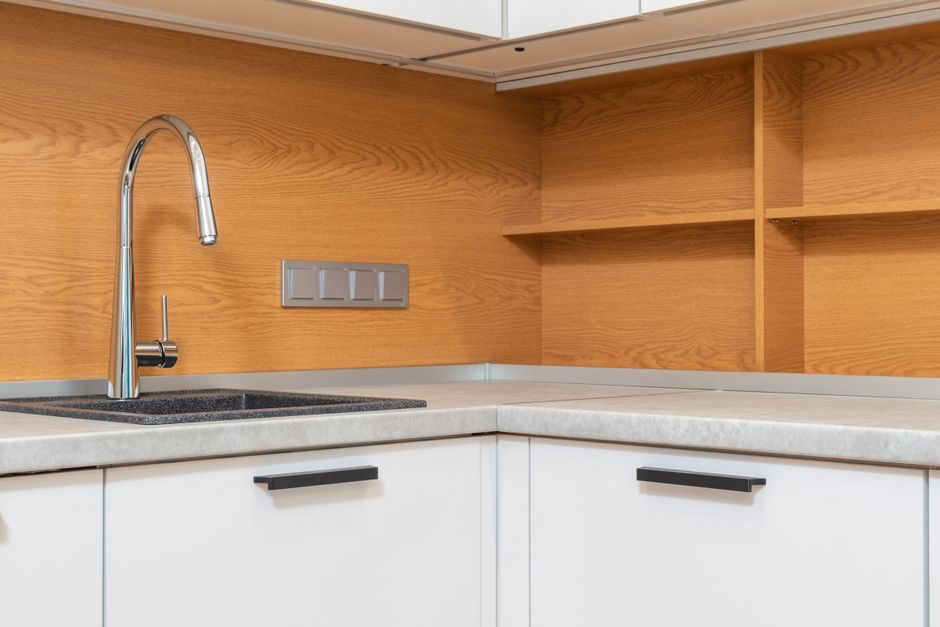
The most time-sensitive situation involves kitchen cabinets. A 25% tariff on imported cabinets took effect in October 2025, and that already showed up in quotes most homeowners got this spring. The planned increase to 30% has been pushed to January 2027, which sounds like good news. It is, but only if you act on it. According to Design and Biz’s April 2026 analysis of renovation costs, importers facing 25-46% tariff exposure are already narrowing product selections, meaning specific door styles, finishes, and hardware configurations may simply stop being available within the next six to twelve months, regardless of price.
- NAHB estimates tariffs add ~$10,900 to a typical 2026 home project cost.
- Cabinet tariffs jump from 25% to 30% in January 2027 , order by October 2026 to land safely.
- Metal roofing is up 15–25%; asphalt shingles up 8–15% over 2024 prices.
- Landscaping and hardscaping are the most tariff-resistant categories right now.
- 19% of homeowners have already delayed DIY plans due to tariff-driven cost increases.
The Cabinet Window Is Real, and It’s Short
If a kitchen renovation is anywhere in your 12-month plan, move it up. The jump from 25% to 30% on imported cabinets might sound modest, but on a $15,000 cabinet package, that’s $750 in additional cost overnight in January, on top of what’s already been absorbed. To actually clear before the increase hits, your order needs to be placed by October or November 2026 at the latest. Lead times on semi-custom and custom cabinets run 8-14 weeks from most suppliers.
The subtler risk is availability, not just price. When tariffs squeeze margins, importers consolidate SKUs. That Shaker-style door in a specific stain finish you’ve been planning around? If it’s coming from a Chinese or Southeast Asian manufacturer, there’s a real chance it’s gone from the catalog by Q1 2027, replaced by whatever the importer could keep profitable. Get specific quotes now. Lock in what you can.
Where the Price Increases Are Already Baked In
Roofing and lumber aren’t waiting for future tariff increases. They’ve already moved.
Steel tariffs of 25% have run through the supply chain into metal roofing, which is up 15-25% over 2024 levels. Asphalt shingles, linked to petroleum input costs, are up 8-15%. Lumber is up roughly 17%. None of those numbers are coming down in the near term. If you’re getting roofing bids right now, you’re not getting a tariff discount by waiting. The cost is already in the price.
What this means practically: stop treating roofing as a project to defer. A roof that needs attention in the next 18 months should get attention now. Contractors are also seeing higher material costs themselves, so waiting doesn’t help on the labor side either.
What’s Actually Still Affordable: Landscaping and Hardscaping
This is the category that deserves more attention than it’s getting. Concrete, natural stone, and native plants are among the most tariff-resistant materials in construction right now, according to industry analysts. Most hardscaping materials are domestically sourced or come from countries without significant tariff exposure. Labor for landscaping work hasn’t seen the same inflationary pressure as interior trades.
| Project Category | Tariff Exposure | 2026 Price Trend |
|---|---|---|
| Kitchen cabinets (imported) | High (25%, rising to 30%) | Up sharply |
| Metal roofing | High (steel tariffs) | Up 15–25% |
| Lumber / framing | Moderate–High | Up ~17% |
| Concrete / hardscape | Low | Stable |
| Native plants / landscaping | Very low | Stable to slight increase |
If you had a backyard patio, retaining wall, or drainage project on your list, this is the year it makes more financial sense relative to interior work than it has in a long time. The materials are available, prices are stable, and you’re not racing a tariff clock.
How to Actually Shop Right Now
Get quotes from multiple suppliers and ask specifically where materials originate. Domestically manufactured cabinets (companies like Kraftmaid’s US-built lines or custom shops working with American-sourced plywood) aren’t subject to the same import tariff hit. You’ll pay more upfront per unit sometimes, but you’re not absorbing a 25% tariff markup.
For lumber, buy what you need now if you’re within 90 days of a project start. Staging materials in your garage isn’t ideal, but a 17% price increase and continued uncertainty make it worth the inconvenience for larger quantities. Ask your supplier about current stock versus incoming orders, because stock on hand was purchased before recent tariff adjustments and may carry lower cost.
A note on the 19% of homeowners who’ve delayed or modified projects due to cost increases. That number, from Clever Offers’ February 2026 survey, rises to 25% among urban homeowners. Delay is sometimes the right call. But for cabinet-heavy projects and anything involving a deteriorating roof, delay is the more expensive choice, not the safer one.
The tariff environment through early 2027 is not going to simplify itself. But the homeowners who come out ahead are the ones treating this like a procurement problem, not a waiting game. The window on cabinets closes in January. Everything else is already priced in.
Sources
- How 2026 Tariffs Are Raising Renovation Costs , Design and Biz (April 9, 2026)
- New Data: Half of Homeowners Can’t Afford Necessary Renovations , Clever Offers (February 16, 2026)
- 2026 Tariffs: Steel +25%, Cement +25% , Your Budget Impact , CostflowAI (March 3, 2026)
- Will Home Improvement Costs Drop in 2026? , DaBella (July 2026)
- 6 Home Features That Are About to Get a Lot More Expensive in 2026 , AOL (2026)
- Home Renovation Forecast 2026 , 2-10 Home Buyers Warranty (May 26, 2026)
Photo: Littlehampton Bricks via Pexels