 Dana Morrison
You budgeted $4,000 for a bathroom refresh. You’ve watched three YouTube videos, you’ve got a free weekend, and you’re feeling capable. Then you price out the vanity. The one you picked last fall is now $800 more than it was, the cabinet place says lead times are six weeks out, and your lumber yard just raised prices again. Welcome to summer 2026, where the DIY math that made sense eighteen months ago has quietly stopped working.
This isn’t a reason to abandon home improvement projects. It’s a reason to be smarter about which ones you tackle yourself, because the cost of being wrong has gone up on both ends: materials are more expensive when you buy them, and the consequences of skipping the right steps are far more expensive when something goes wrong.
What’s Actually Happening to Material Prices
Framing lumber spiked 5.11% in Q2 2026, according to Gordian’s May 2026 lumber price tracking, after two consecutive down quarters gave a lot of homeowners false hope that prices were finally settling. Year-over-year, lumber is up 4.21%, and that marks nine straight quarters of year-over-year growth. This isn’t a blip.
A big part of the pressure is coming from the border. Canadian softwood lumber, which supplies roughly 25 to 30% of the U.S. market, now faces a combined duty rate of up to 45%. That’s a significant chunk of domestic supply getting hit at the worst possible time: peak summer building season, when contractors and DIYers are both competing for the same inventory at the same yards.
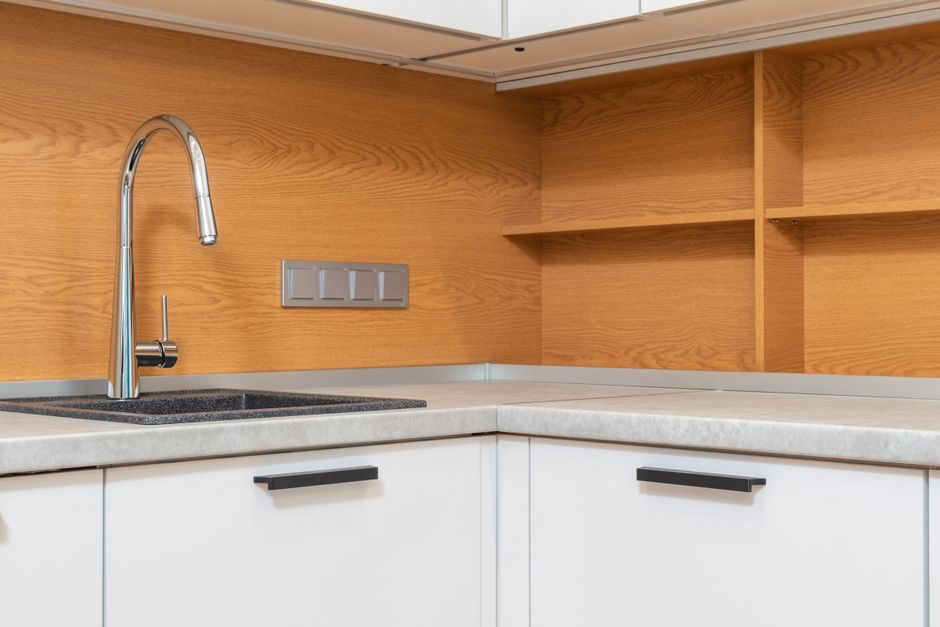
And it’s not just lumber. Tariffs on imported kitchen cabinets and vanities rose to 50% on January 1, 2026. If you’ve priced a semi-custom kitchen cabinet run recently and thought your memory of the number was off, it probably isn’t. The price genuinely jumped. These aren’t luxury product categories; these are the bread-and-butter SKUs that show up in almost every kitchen remodel and bathroom renovation. Which means the projects that used to offer the clearest DIY savings are now the ones where the material cost gap has narrowed the most.
How This Should Change Your Project Calculus
| Project Type | Material Cost Impact | Labor Savings | Permitting Risk | DIY Recommendation |
|---|---|---|---|---|
| Painting & trim installation | Low | High | Minimal | Still viable |
| Tile work (with experience) | Low-Medium | High | Minimal | Still viable |
| Basic landscaping | Low | High | None | Still viable |
| Insulation (accessible areas) | Low-Medium | High | Minimal | Still viable |
| Structural work | High | Medium | High | Not recommended |
| Imported cabinet installation | Very High | Medium | High | Not recommended |
| Electrical/plumbing systems | High | High | Very High | Not recommended |
| Demo work (contractor-supervised) | N/A | High | Low | Recommended |
I’ve seen a lot of homeowners make the same mistake in high-material-cost environments: they absorb the price shock on materials but then try to claw back savings by cutting corners on labor, permits, or both. That’s exactly backwards.
When materials are expensive, waste and rework become catastrophic. A framing mistake that costs you two studs in a normal market costs you two studs at a significant premium right now. If you’re not genuinely comfortable with the skill set a project requires, this is not the market to learn on the job. The YouTube confidence that the Farnsworth Group flagged in their February 2026 research is real: the primary DIY motivator has actually shifted from saving money to “I’m able to do it myself,” even as financial stress among homeowners hit a five-quarter high in 2026. Those two things together are a setup for expensive mistakes.
So which projects still make DIY sense? Finish work, in general, still does. Painting, trim installation, tile work if you have some experience, basic landscaping, insulation in accessible areas. These are labor-heavy and material-light, or they use domestic materials less affected by the current duty environment. The labor savings are real, the margin for error is recoverable, and the permitting risk is minimal or nonexistent.
What’s gotten harder to justify as a pure DIY play: anything structural, full cabinet installations where you’re buying imported product at inflated prices and one wrong measurement is a $500 mistake, anything that touches electrical or plumbing systems.
The Permit Problem Nobody Wants to Talk About
Here’s where I’m going to push back on the instinct a lot of homeowners have right now, which is to skip permits to offset rising material costs. I get the logic. Permits cost money and time, inspectors can complicate timelines, and plenty of neighbors have done the same small jobs without them for years. But the risk calculation has changed.
An April 2026 report flagged by Homedit found that home inspectors are actively flagging unpermitted electrical work as a leading cause of denied insurance claims. And the standard isn’t “major project.” Insurers are treating missing permits as negligence even for small jobs, like adding a single outlet. That’s a significant shift in how carriers are interpreting policy language, and it’s showing up in real claim denials.
The scope of exposure is bigger than most people realize. Estimates suggest up to 50% of U.S. homes carry some form of unpermitted work, according to Econosurance’s April 2026 analysis of insurance coverage gaps. If you’re one of those homeowners and you have a fire, a flood, or a liability claim, that unpermitted work becomes a preexisting condition your insurer can use to reduce or deny your payout. The money you saved on the permit gets dwarfed fast.
Pull the permit. Pay the fee. Schedule the inspection. If the work passes, you’ve got documentation that protects you at resale and with your insurance carrier. If it doesn’t pass, you find out before it’s buried in a wall.
Where to Actually Find the Savings Right Now
If you want to stretch a home improvement budget in this environment, the real leverage isn’t in avoiding permits or DIYing things you’re not ready for. It’s in being strategic about scope and sequencing.
First, prioritize projects that use domestic materials or materials with lower tariff exposure. Concrete, domestic hardwood flooring, domestic tile, and insulation products are all less tariff-affected than imported cabinet lines or Canadian framing lumber.
Second, do your own demo when a contractor is involved. Demo is almost always billable labor, it’s low-skill, and it rarely requires a permit on its own. I’ve seen homeowners save $800 to $1,500 on a mid-size bathroom just by handling tearout themselves before the tile contractor shows up.
Third, if you’re buying cabinets or vanities, buy now and store them rather than waiting for prices to come down. The tariff structure that took effect January 1, 2026 isn’t going anywhere fast, and summer demand is only going to keep prices elevated through the next few months.
The smartest DIY move in a high-cost market isn’t always doing more yourself. Sometimes it’s doing the right parts yourself, protecting the work you do with proper permits, and leaving the high-stakes, high-material-cost work to someone who won’t have to buy twice.
Sources
- What the Data Says: Lumber Price Updates, Gordian (May 2026)
- Recent Tariffs Threaten Residential Construction, Brookings (October 2025)
- Home Inspectors Say This DIY Fix Is Behind Many Denied Insurance Claims, Homedit (April 10, 2026)
- Does Homeowners Insurance Cover Unpermitted Work?, Econosurance (April 4, 2026)
- 10 DIY Statistics Shaping the Home Improvement Industry, Farnsworth Group (February 2026)
- Lumber Prices in 2026: What Builders and Homeowners Need to Know, Lumber Capital (December 2025)
Photo: Collab Media via Pexels