 Paul Zhang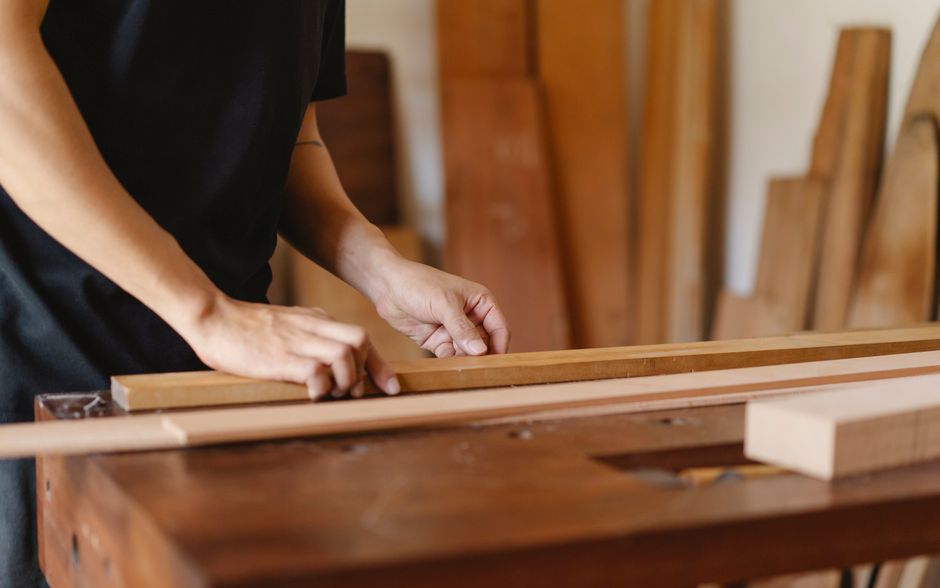
Most homeowners I’ve talked to lately think material prices are finally cooling off after the COVID chaos. I’ll be honest: I thought the same thing heading into this year. What surprised me was the data coming out of mid-2026. Prices aren’t cooling. They’re climbing in entirely new ways, driven not by supply chain snags but by deliberate trade policy. The tariffs that started making headlines in 2025 have quietly embedded themselves into the cost of nearly every project you might be planning, and some of the deadlines are a lot closer than people realize.
Here’s the picture as of July 2026. Canadian softwood lumber, which supplies roughly 25% of all U.S. lumber, is now hit with duties that jumped from 14.5% to 35%, stacked on top of an additional 10% Section 232 tariff. The NAHB calculated in March 2026 that this combination has pushed Canadian lumber prices up approximately 45%. Meanwhile, Gordian RSMeans reported framing lumber hitting $916.62 per thousand board feet in Q2 2026, up 5.11% in a single quarter. That’s the ninth consecutive quarter of year-over-year increases. This isn’t a blip anymore.
- Framing lumber hit $916.62/thousand board feet in Q2 2026, up 5.11% in one quarter alone.
- A 25% tariff on imported kitchen cabinets rises to 50% on January 1, 2027, creating a real deadline.
- Steel is up 18%, aluminum up 22% in 2026; drywall holds at $14.50/sheet but that's still 42% above pre-pandemic.
- Domestic composite decking (Trex, TimberTech) faces minimal tariff impact vs. imported hardwoods up 15–25%.
- NAHB estimates tariffs add roughly $10,900 per new home built; Brookings puts total U.S. impact at ~$30 billion.
The Lumber Math Has Changed Permanently
Let me be direct about what $916 per thousand board feet actually means for a weekend project. A standard 400-square-foot deck that might have used around 2,000 board feet of framing lumber now costs significantly more just at the lumber yard before you buy a single fastener. A year ago you’d budget differently. Today you can’t.
The thing is, not all lumber is equally tariffed. Domestic Southern Yellow Pine and Western Douglas Fir have seen smaller increases than Canadian SPF (Spruce-Pine-Fir), since the heaviest duties land on Canadian imports specifically. If your lumber yard is sourcing domestically, the hit is softer. Ask them directly where the wood is milled. That’s a conversation I never used to have to tell homeowners to have, but here we are.
The Kitchen and Bathroom Deadline Nobody’s Talking About
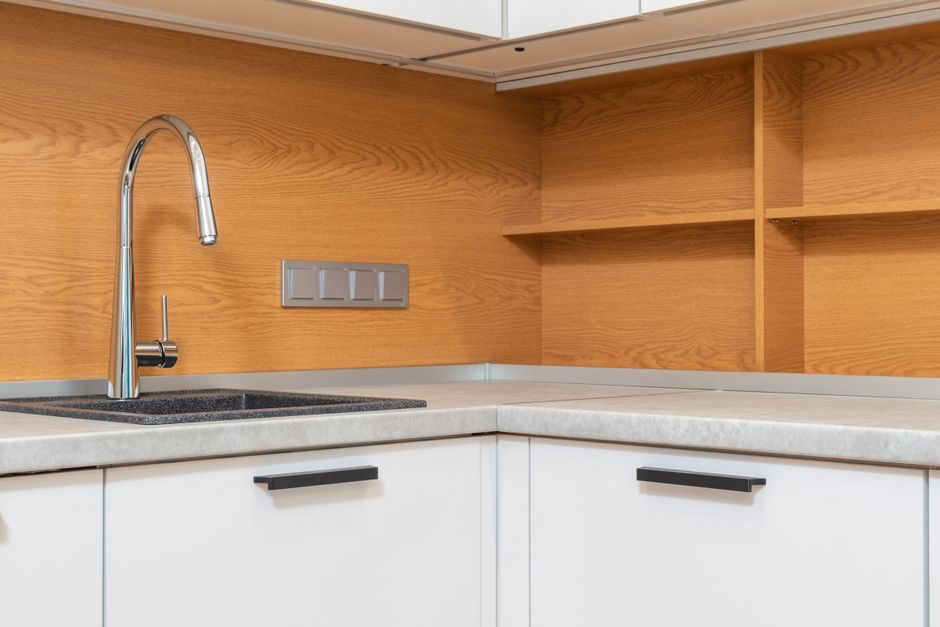
This is the one that genuinely caught me off guard. There’s a 25% tariff currently in place on imported kitchen cabinets and bathroom vanities, and it’s scheduled to jump to 50% on January 1, 2027. That’s six months away.
If you’re planning a kitchen refresh or bathroom renovation that involves new cabinetry, the calculus is simple: order before December 31, 2026, and you’re paying a 25% premium on imports. Wait until January and you’re looking at 50%. On a mid-range kitchen cabinet package that might run $8,000 to $12,000 at import pricing, that’s a $2,000 to $3,000 swing on a single line item.
What doesn’t get said often enough is that “imported cabinets” covers a huge percentage of what’s sold at home improvement retailers. A lot of the stock cabinets at the big-box stores come from overseas manufacturing. Check the origin before you assume you’re buying domestic.
What’s Up, What’s Flat, and Where to Shift Your Budget
Not everything got hammered equally. Here’s where things actually stand:
| Material | 2026 Status | Notes |
|---|---|---|
| Framing Lumber | +45% (Canadian), less for domestic | Sourcing matters; ask your yard |
| Steel | +18% | Affects brackets, beams, posts |
| Aluminum | +22% | Railings, flashing, gutters |
| Drywall | Flat , but $14.50/sheet | 42% above pre-pandemic baseline |
| Imported Hardwood Decking (Ipe, Cumaru) | +15–25% | Significant for deck builds |
| Aluminum Railings | +10–20% | Consider vinyl or wood alternatives |
| Domestic Composite Decking (Trex, TimberTech) | Minimal impact | Made in U.S.; tariffs largely bypass these |
| Imported Kitchen Cabinets/Vanities | +25% now, +50% Jan 1, 2027 | Hard deadline for renovation planning |
Drywall holding at $14.50 sounds like a relief until you remember that’s still nearly half again what it cost before 2020. It’s not going up much more right now, but it was never cheap again to begin with.
The composite decking angle is genuinely useful. Per LDN Decks’ June 2026 analysis, brands like Trex and TimberTech manufacture domestically and are largely insulated from these tariffs, while imported tropical hardwoods are taking a 15 to 25% hit. If you were on the fence between composite and Ipe, the tariff environment just made that decision for you financially.
Should You DIY at All Right Now?
The research is mixed on this one, and I want to be honest about that. The NAHB’s March 2026 numbers show tariffs adding roughly $10,900 per new home, with over 60% of builders reporting higher costs. Brookings puts the total hit to U.S. residential construction at around $30 billion. Those are contractor-scale numbers. But the material cost increases hit DIYers just as hard, sometimes harder, because we don’t get contractor pricing.
Where DIY still makes sense: drywall work, painting, flooring over existing subfloor, and any project using domestically sourced materials where your labor savings are large relative to the material budget. Where it gets harder to justify: complex deck builds using imported hardwoods, full kitchen cabinet replacements, and anything heavy on steel or aluminum components where a contractor’s buying power might offset some of the premium.
The honest version of the advice is this. If you’ve been sitting on a project that involves imported cabinets, this is the year to move. If you’re planning a deck, look hard at domestic composites. If you’re framing anything, ask your supplier whether they’re sourcing Canadian or domestic, and get that answer in writing before you price the job.
The tariff environment in 2026 isn’t punishing every project equally. It’s punishing specific materials, from specific origins, at specific moments. The homeowners who’ll come out ahead are the ones who treat material sourcing like it matters, because right now, it genuinely does.
Sources
- How Tariffs Impact the Home Building Industry , NAHB (March 2026)
- Lumber Price Updates (Q2–Q3 2026) , Gordian RSMeans (July 2026)
- 2026 Construction Tariffs: Steel +25%, Cement +25% , CostFlowAI (March 2026)
- How Tariffs Affect Deck Prices in 2026 , LDN Decks (June 2026)
- Lumber Prices 2026: Forecast, Tariff Impact & Buying Guide , Buildermuse (April 2026)
- Recent Tariffs Threaten Residential Construction , Brookings Institution (October 2025)
Photo: Ono Kosuki via Pexels