 Paul Zhang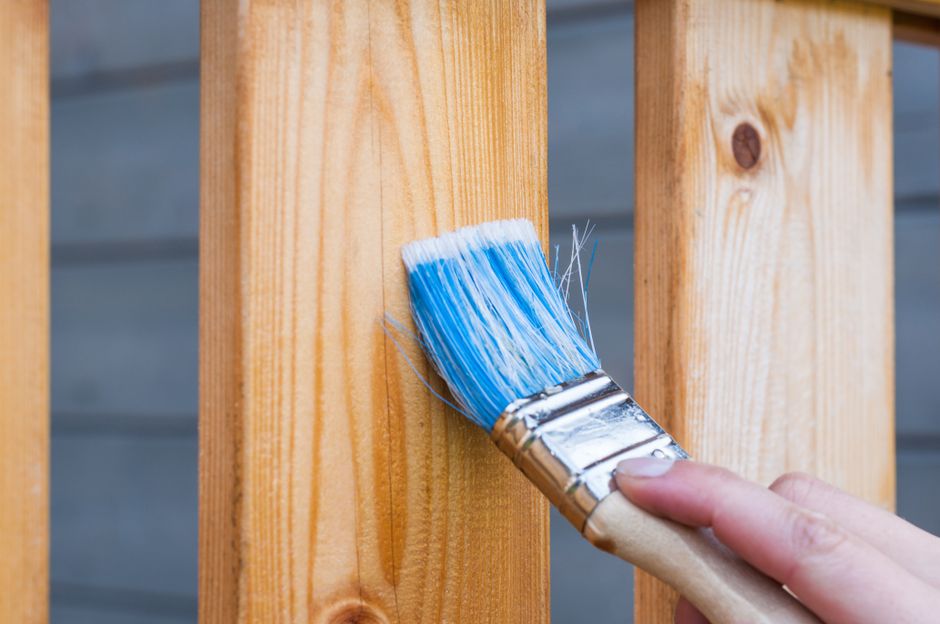
If you’ve been putting off your deck this summer, you’re not alone. A lot of homeowners right now are sitting with a contractor quote in one hand and a can of Defy or Armstrong Clark in the other, trying to figure out if the math still makes sense to hire it out. With lumber and material costs climbing steadily through 2025 and into 2026, that calculation has genuinely shifted. This isn’t a normal year for deck work, and the decision deserves a real look.
What Tariffs Actually Did to Deck Material Costs
The short version: tariffs stacked on top of tariffs, and the lumber market noticed.
A 10% Section 232 tariff on all softwood timber and lumber imports took effect October 14, 2025, layered on top of existing Canadian duties that now exceed 35%. The NAHB reported that combined, these policies pushed Canadian lumber prices up roughly 45%. That’s not a rounding error. That’s a structural price shift that rolled downhill from sawmills to lumberyards to the guy at Home Depot asking why a bundle of cedar decking costs what it costs.
Gordian RSMeans data put framing lumber at $916.62 per thousand board feet in Q2 2026, a 5.11% spike in a single quarter and the ninth straight quarter of year-over-year growth. For a deck staining project, you’re not buying framing lumber, but that number matters because it reflects the broader pressure on pressure-treated decking, cedar boards, and the structural components underneath. If a contractor is also quoting you on any board replacement alongside your stain job, those line items have moved.
CostFlow AI’s analysis of 2026 tariff impacts found that deck and fence projects are running 8 to 15% higher in material costs compared to early 2025 quotes. That’s the window your contractor is working inside, and it’s part of why quotes that seemed reasonable eighteen months ago look different today.
The Actual Cost Gap Between DIY and Hiring Out
| Scenario | DIY Cost (Materials) | Professional Cost (Labor + Materials) | Labor Savings |
|---|---|---|---|
| 300 sq ft deck, maintenance stain | $150-$250 | $550-$1,250 | $300-$900 |
| Framing lumber (Q2 2026) | $916.62 per 1,000 board feet | - | - |
| Deck/fence projects (material cost increase, early 2025 vs. 2026) | +8-15% | +8-15% | - |
Here’s what I tell people when they’re wrestling with this: the labor savings on a deck stain job are real and they’re not trivial.
According to Angi’s May 2026 data, DIY staining a 300 square foot deck runs somewhere between $150 and $250 in materials. A professional doing the same job runs $550 to $1,250. That’s a labor savings of $300 to $900 on a single weekend project. For most homeowners with a reasonably accessible deck, no major rot, and a free Saturday, that’s a compelling case for doing it yourself.
The FacadeColorizer deck restoration guide published in June 2026 caught something interesting in their data: 27% of people searching for deck stain guidance had just received a contractor replacement quote, not a staining quote. That’s sticker shock driving DIY consideration. People who were ready to hire out suddenly aren’t, and they’re looking for a way to buy time on their existing deck without writing a large check. Staining and sealing is often exactly that bridge.
What changes the math is the condition of your deck. If you’ve got boards that need replacing, if the existing finish is peeling in sheets, or if the structure has gone three or four years without any attention, the prep work expands significantly. Power washing, sanding, stripping old finish, and letting everything dry properly can turn a one-day project into a three-day project. That’s where a lot of DIY staining jobs go sideways, not in the application, but in the prep shortcuts.
When DIY Makes Sense and When It Doesn’t
DIY staining makes sense when your deck is in decent shape, you’ve kept up with it in recent years, and you’re doing a maintenance coat rather than a rescue mission. A semi-transparent stain on clean, dry wood is genuinely one of the more forgiving DIY projects out there. You need a pump sprayer or a good brush, a quality stain, and patience.
July is actually one of the better months for it, which is part of why you’re probably thinking about this right now. The ideal application window is between 50°F and 90°F with no rain in the forecast for at least 24 to 48 hours. The catch in July, depending on where you live, is afternoon heat. In Texas, Arizona, or anywhere the afternoon sun is baking the wood above 90°F, you’re looking at early morning application. Hot wood causes stain to dry too fast and leaves lap marks. Start at 7 a.m., not noon.
DIY gets harder when you’re dealing with a two-story deck with awkward angles, a deck that’s fully enclosed and requires moving furniture and navigating tight spaces, or a finish that requires full strip-and-restart. At that point, the time investment starts to rival what a pro would charge.
What to Do If You’re Getting Contractor Quotes Right Now
If you’ve already called a couple of contractors and the quotes surprised you, ask them to break out the line items. A quote that bundles power washing, prep, stain, and any board replacement into one number makes it hard to know where the cost is actually coming from. In a tariff-pressured materials environment, some contractors are also padding estimates anticipating further price movement. That’s not dishonest, it’s risk management, but it’s worth understanding.
If the quote includes board replacement, ask specifically which boards, why, and whether any of them are structural versus cosmetic. A soft spot in a decking board is a staining problem only until someone steps through it, but a cosmetically weathered board that’s still structurally sound doesn’t need to come out before a stain job.
You can also negotiate the scope. Some contractors will let you handle the power washing and prep yourself, then come in just for the stain application. That hybrid approach saves you real money and keeps a pro involved in the finish work, which is often where quality variation shows up.
The bottom line is this: summer 2026 is genuinely a moment where the DIY math on deck staining has shifted in homeowners’ favor. Material costs are up, contractor quotes are higher, and the project itself, on a well-maintained deck, is well within reach for most people willing to do the prep right. The risk is always in underestimating what the prep actually requires. Get that right and the rest of it takes care of itself.
Sources
- Gordian RSMeans: Lumber Price Updates Q2 2026 (May 2026)
- NAHB: New Tariffs on Lumber and Wood Product Imports (April 2026)
- CostFlow AI: 2026 Tariffs , Your Budget Impact (March 2026)
- Angi: How Much Does It Cost to Stain a Deck? 2026 Data (May 2026)
- FacadeColorizer: Deck Restoration vs Replacement Cost 2026 (June 2026)
- HomeGuide: 2026 Cost To Stain A Deck (2026)
Photo: Pixabay via Pexels